
Are South Carolina Mugshots Public?
South Carolina FOIA counts photographs as public records when a public body prepared, owns, uses, possesses, or keeps them. A sheriff or detention center may therefore hold a requestable booking photo. Nothing in the law forces it online. An exemption can still block release. Your right covers inspecting, copying, or receiving a record the agency already has. Law-enforcement and privacy exemptions apply at times. A pending matter, safety, or personal privacy can each justify withholding. No statewide rule promises every booking image. A photo may appear on a current custody page and vanish at release. It may sit only in an agency file instead. The South Carolina FOIA text spells out what counts as a public record and where access stops.
South Carolina Mugshot Statute
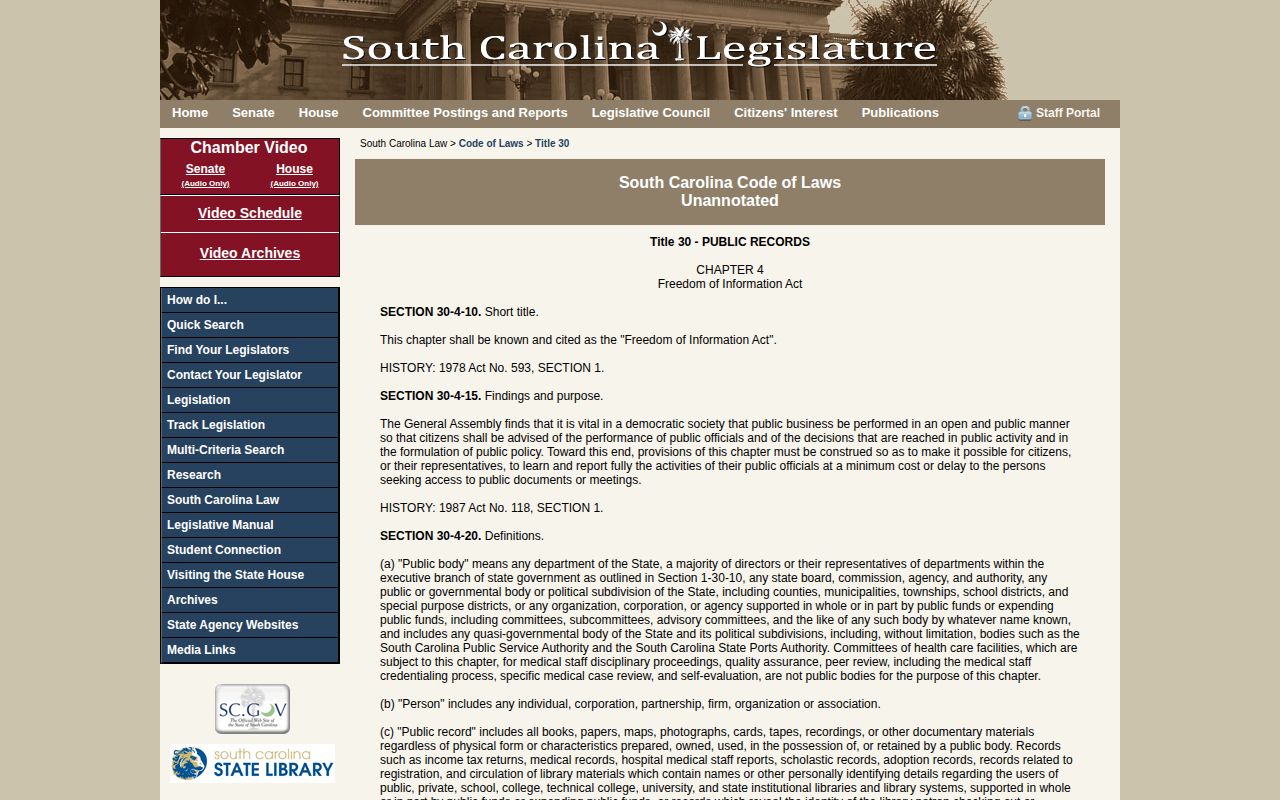
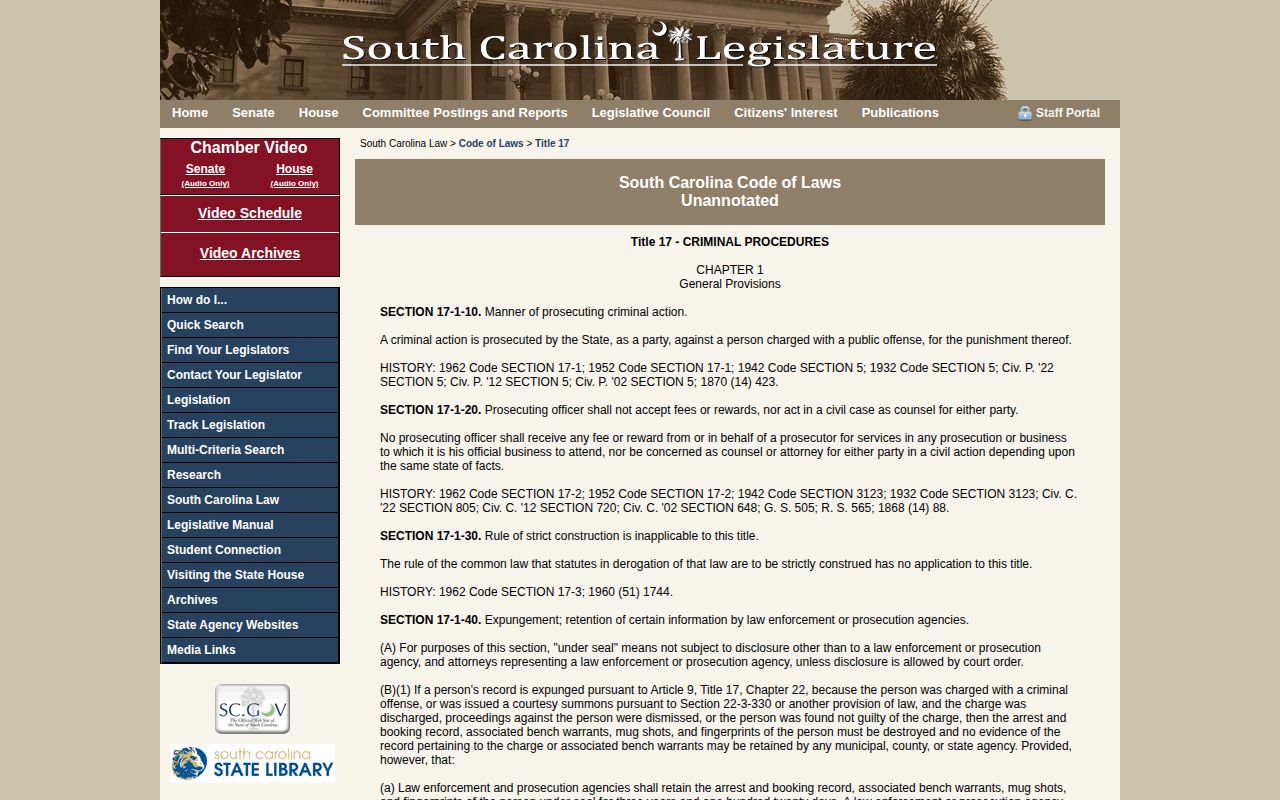
Section 17-1-60 calls publishing covered booking records business. Photos count. It targets anyone who obtains a record knowing publication will demand payment for removal or revision. Charging a removal or revision fee is barred. Sheriffs are not forced to publish. It also does not make a private page official. For a qualifying outcome, § 17-1-60(D) sets a certified-mail process. The request names the person, the arrest date, the arresting agency, and the exact post URL. Certified proof of discharge, dismissal, expungement, or a not-guilty result goes in the envelope too. A covered publisher must remove the record free within 30 days. A plea to a lesser or different offense earns a free revision in that same window. Exceptions cover news, history, and commentary media. The law also limits employee sharing with covered publishers. Misdemeanor penalties reach $1,000, 60 days in jail, or both, plus civil suits for damages. The official § 17-1-60 text controls the limits and remedies.
Eligibility, a qualifying result, complete proof, and publisher coverage each matter here. Note: The statute is a no-fee correction rule for covered publishers, not an automatic erase button for every copy.
South Carolina Law History
The Code credits 2016 Act No. 132, Senate Bill 255, effective May 16, 2016, for adding § 17-1-60. That act also changed § 17-1-40. The legislative digest summarizes the expungement, removal, penalty, and exception changes. A separate expungement study committee report records testimony about publishers seeking payment for changes. It offers context only. No published appellate ruling squarely applies § 17-1-60's private-publisher process. Trial disputes, demands, and settlements may still exist. The enacted Code remains the controlling source.
South Carolina FOIA Photo Requests
A focused request works when a county or city posts no image or drops a released person from its roster. Address it to the public body holding the record. Ask for the booking sheet, arrest report, or photograph itself. Say whether you want inspection, a copy, or electronic delivery. The agency need not build a new file or database for you. Give enough detail to find one event. A date range helps. So does a name or booking number. Add the arresting agency and the record type. If a photo is the target, say so plainly. Electronic copies are fair to request, but the agency can charge reasonable actual costs for search, retrieval, redaction, or copying. Looking at the record itself carries no fee. A deposit may be required too. It can run up to one quarter of the estimated cost.
- Identify the agency that made or holds the arrest or booking record, which may differ from the court that later handled the case.
- Describe the person, date range, booking number if known, and the exact record requested. Ask for an electronic copy when useful.
- Ask for the fee estimate before work begins. A deposit may be required when the expected cost reaches the statutory threshold.
- If access is denied in whole or part, ask which exemption applies and whether a nonexempt portion can be released.
FOIA sets two clocks. An agency generally gets 10 business days, weekends and legal holidays excluded, to decide. Older records get 20 days. More than 24 months old is the trigger. Once access is granted, production is generally due within 30 calendar days, or 35 for a record over 24 months old, subject to the deposit rule. A late response does not erase a valid exemption.
| Request stage | General statutory timing |
|---|---|
| Agency determination | 10 business days, or 20 business days when the record is more than 24 months old |
| Production after access is granted | 30 calendar days, or 35 days for a record more than 24 months old |
| Possible deposit | Up to 25 percent of the estimated cost may be requested |
The law does more than address fees and photos. Under the FOIA text, jail and detention records that identify people held during the past three months must be open for in-person inspection or copying during normal operations, unless an exemption covers them. That matters in counties without an online roster. It does not force every jail to post photos on a website or leave an image up permanently. Photos stay a records question, not a publishing duty. For the county-by-county custody and roster routes, the South Carolina booking and mugshot search page breaks them out separately.
South Carolina Court Records
A booking record captures the arrest itself. The court's outcome lives elsewhere. A disposition entry can show a plea, a dismissal, an acquittal, or a sentence, and later hearings or appeals may follow. A public arrest entry can stay on file even when the case closes without a conviction.
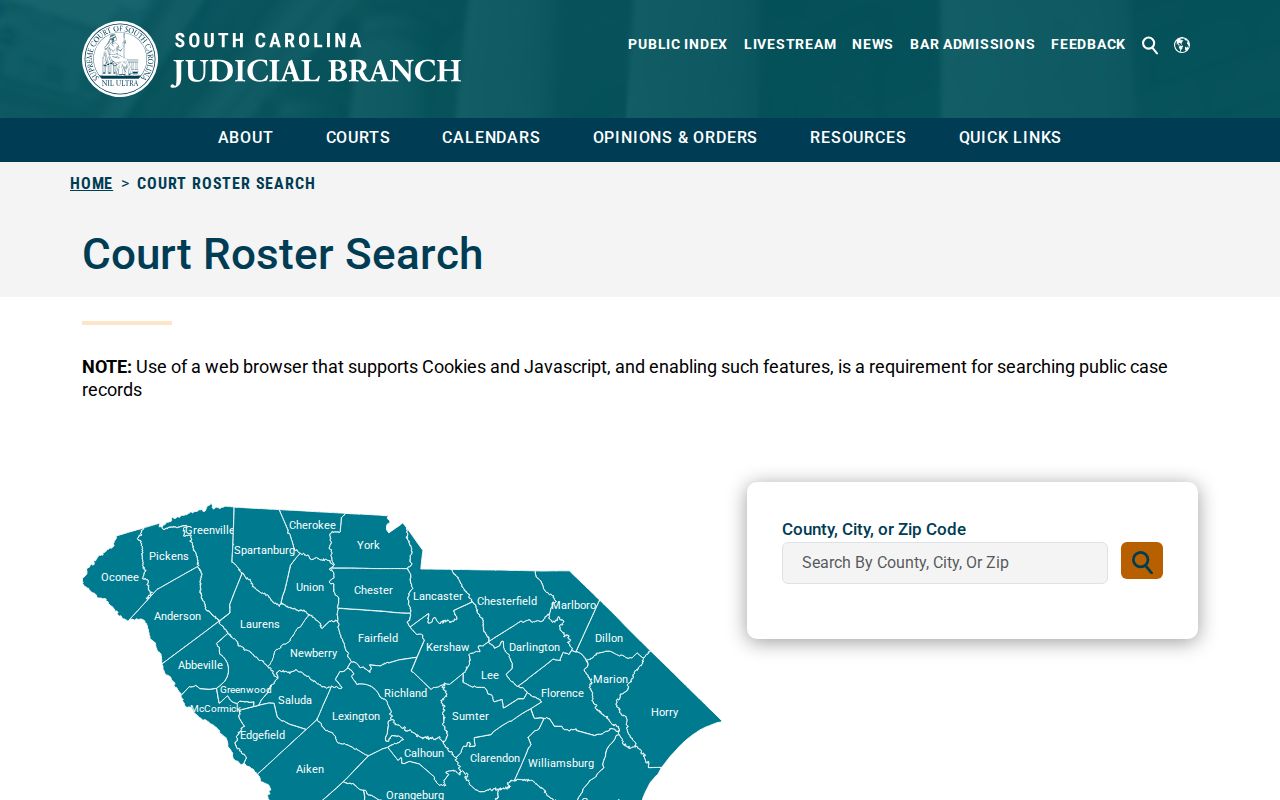
Two search tools cover the court side. The Judicial Branch Court Roster Search ties county and city indexes together, with separate routes for Charleston and Greenville. For deeper case detail, the trial-court portal runs on its own system. Match the county, case number, name, and date carefully. Summary-court matters may sit outside the general-sessions route entirely. Both sites lean on browser scripts and cookies, so a page error means nothing about the case.
One more caution applies here. An index is a doorway, not the whole file, and some filings or later events never land in a single view. If an entry looks thin, ask the clerk which case number holds the disposition, and keep the court's exact wording and dates when checking it against a booking page.
Use plain, neutral terms. A booking shows the arrest. A disposition is the outcome. A release date alone cannot tell you whether charges were dropped, reduced, or still pending.
Note: Match the county, case number, and date, because a name alone can point to someone else's case.
Sealing South Carolina Mugshots
Expungement works on two separate tracks. Government records move under one set of rules. Publisher copies follow another. Under § 17-1-40, a qualifying discharge, dismissal, or not-guilty result generally requires destruction of arrest and booking records. Mugshots, fingerprints, and the court orders used to bring a person before a judge are covered too, subject to sealed-retention exceptions.
Those exceptions have teeth. Law-enforcement and prosecution agencies may keep covered material under seal. The seal lasts three years and 120 days. It runs longer for specified proceedings or defense needs. Detention and correctional facilities hold related exceptions for statistics and defense. Sealed records stay closed unless a court orders otherwise. The destruction itself costs the person nothing.
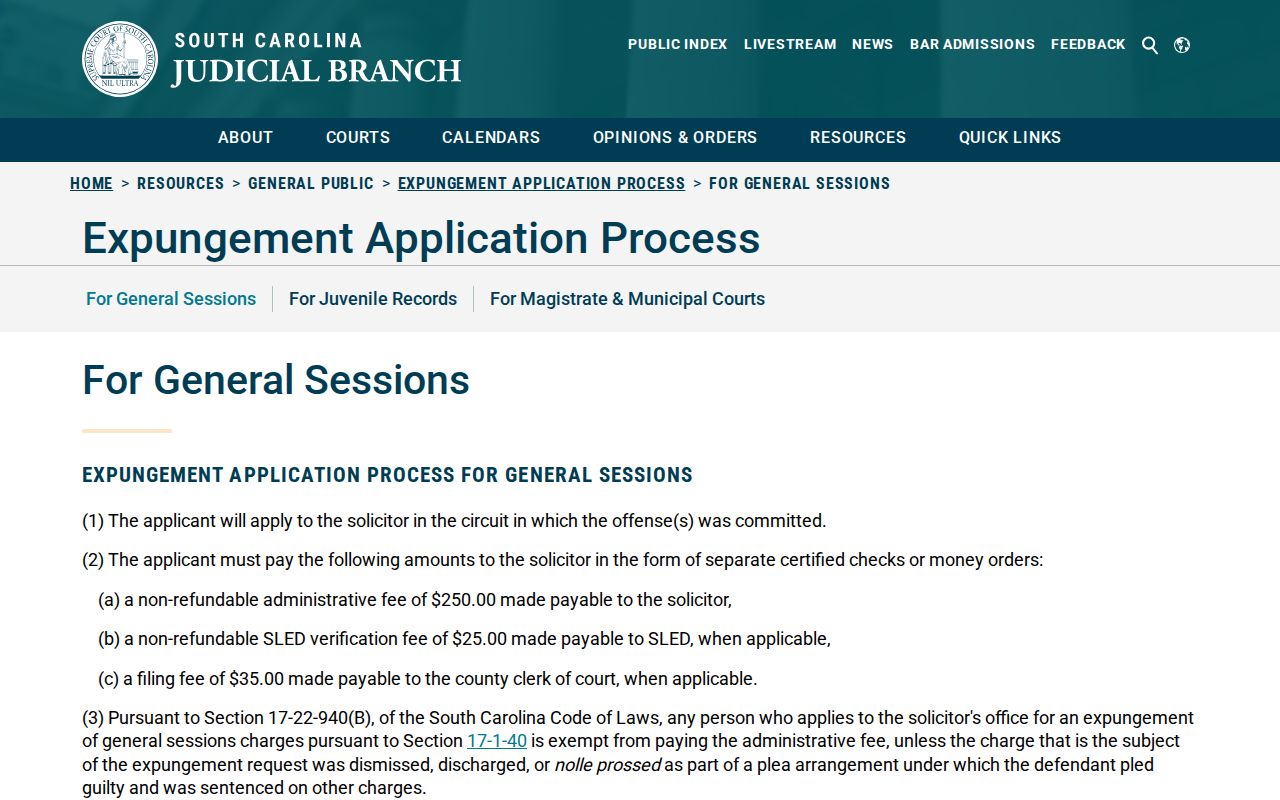
Eligibility turns on the final result and the offense statute. The Title 17 eligibility list lays out the qualifying routes. In General Sessions, the circuit solicitor screens eligibility and collects signatures. The solicitor files the order and distributes copies to the agencies. Fees run $250 to the solicitor, plus $25 to SLED and $35 to the clerk where applicable. Statutory exceptions and fee-free paths exist. The court process page walks through that route in full.
The signed order has to travel. It must reach every office that holds a record. A private publisher sits outside that chain and may need its own separate request.
South Carolina Summary Court
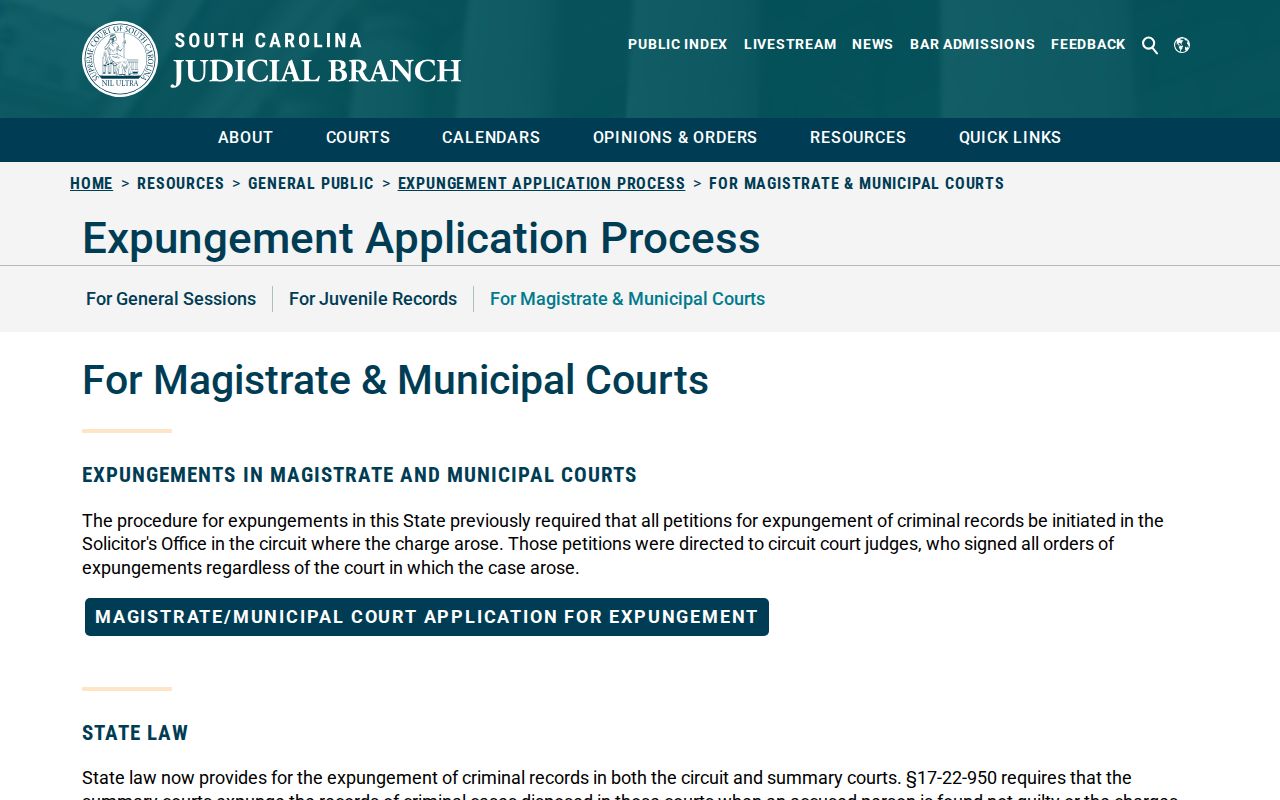
Summary court runs on a simpler track. Section 17-22-950 generally allows a no-cost expungement of a fingerprinted charge. It applies once its conditions and the appeal period run out. An agency has 30 days to object. If none does, the judge signs after the waiting interval passes. The law also directs removal from internet-based public records within 30 days of disposition. No private archive is guaranteed to update without notice. The magistrate and municipal court instructions cover the details.
Other routes live in Title 22, Chapter 5. It covers certain first-offense and diversion matters, qualifying low-level convictions after three or five years, youthful-offender convictions after the sentence plus five years, and first simple-possession cases after three years. A qualifying possession-with-intent route takes longer still. Exclusions, prior-record limits, and one-time rules all apply. Note: An expungement order does not update every private publisher or stale search result.
Correcting South Carolina Mugshot Pages
Three copies, three problems. The agency record, the publisher's page, and the search result each live on their own. Fixing one does not fix the rest. A private page usually demands its own request, with certified proof and the exact URL. Keep a dated copy of the post.
Publisher policies vary widely. BustedNewspaper wants the listing URL and legal proof, and describes a 5-to-10-day review period. RecentlyBooked charges nothing for removal, suppression, or modification. It asks for the URL, name, arrest date, county, reason, and supporting records. Mugshots.com offers free updates for qualifying grounds with signed proof and a site ID. It says processing can take up to 10 business days. Treat these as publisher statements, not promises. South Carolina material can sit untouched for a long time.
An email alone proves no removal right. Section 17-1-60 bars covered publishers from conditioning qualifying changes on payment. Once a source changes or disappears, Google's outdated-content tool can clear the stale search copy. The tool neither expunges a case nor forces a publisher to act.
- Save the exact page URL and note the publisher, arrest date, and agency named in the post.
- Get a certified court disposition or expungement order when the policy or statute requires one.
- Send the request to the publisher’s own no-fee channel, following its stated documentation rules.
- After a source page changes or disappears, use the search engine’s outdated-content process for any stale result.
Juvenile Mugshot Privacy
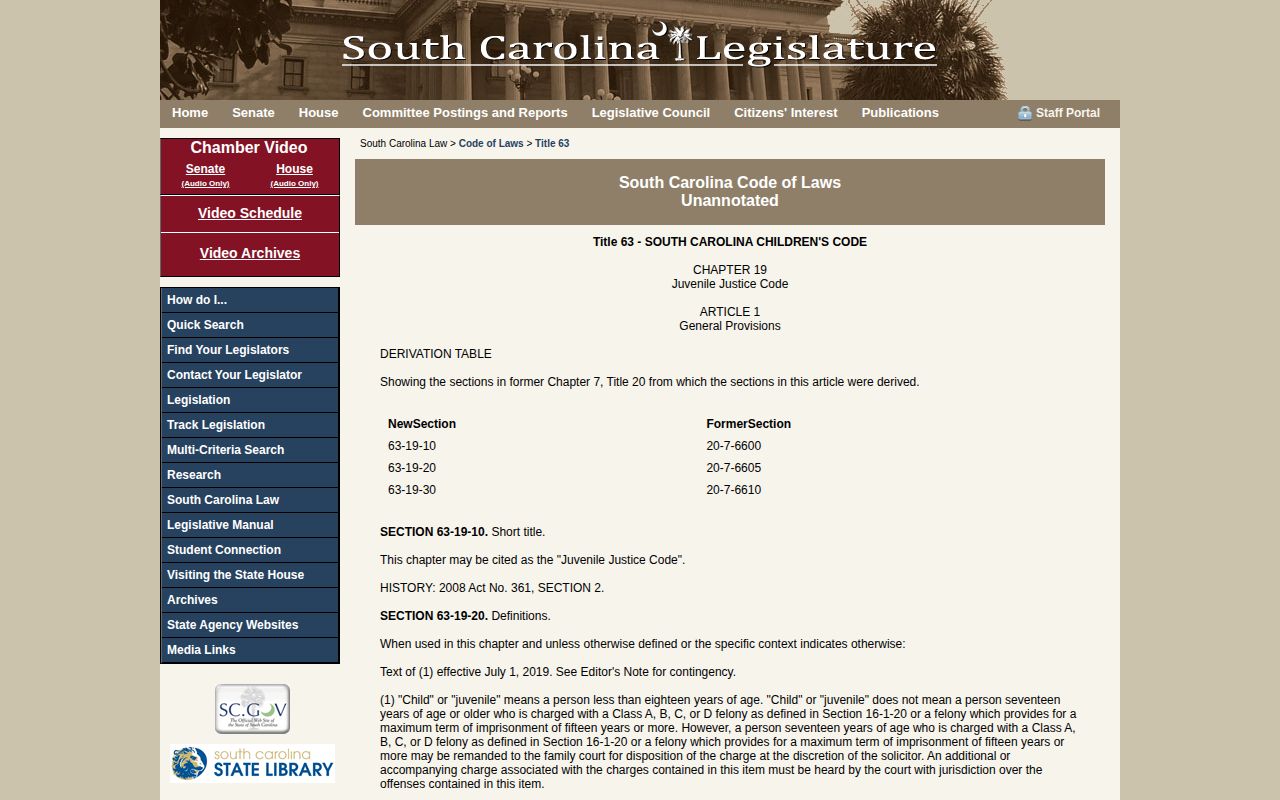
Juveniles get stronger protection. Title 63, Chapter 19 generally treats juvenile-court records as confidential. Access is limited by statute and court order. It keeps law-enforcement files apart from adult records. It also restricts who may receive a child's name, identity, or photo.
Disclosure hinges on narrow exceptions, such as a court order or certain serious-offense adjudications. Juvenile expungement carries its own age, disposition, prior-record, pending-case, and offense rules. Never republish a child's identity from an unofficial page. Ask the court or the agency about access instead.
The South Carolina juvenile law sets confidentiality and disclosure limits for children’s records.
Adult and juvenile files should never be blended. A third-party page that seems to expose a child's identity does not override the statutory confidentiality rules.